Credibility in asylum cases: why small inconsistencies can matter
Many asylum cases turn on whether the judge believes you. The law lets a judge rely on details that seem minor, which is why preparation starts with your own paperwork.

Law checked October 6, 2026 · Updated

Updated October 6, 2026. We re-checked this post against primary sources and updated it. See what changed.
The short version
- A judge decides credibility on the totality of the circumstances, including whether your written and spoken accounts match.
- An inconsistency can count against you even if it does not go to the heart of your claim.
- If the judge decides you should provide corroborating evidence, you must provide it unless you do not have it and cannot reasonably obtain it.
- Read your I-589 and declaration before the hearing, and correct errors in writing before you testify.
In many asylum cases, the most important question is not what happened in your country. It is whether the judge believes you.
The law gives judges wide room to decide that. This post explains the rules, why a detail that seems small can matter, and what you can do to prepare.
How a judge decides credibility
The asylum statute tells the judge to consider the totality of the circumstances and all relevant factors (INA 208(b)(1)(B)(iii)). The factors listed include:
- Your demeanor, candor and responsiveness when you testify.
- Whether your account is plausible.
- Whether your written and oral statements are consistent with each other.
- Whether your account is internally consistent.
- Whether it is consistent with other evidence in the record, including State Department reports on country conditions.
- Any inaccuracies or falsehoods in your statements.
"Written statements" includes your I-589 and your declaration. "Oral statements" includes what you say at your hearing and, if you had one, at an asylum interview.
There is no presumption that you are telling the truth at your hearing. The statute gives a rebuttable presumption of credibility only on appeal, and only when the judge made no explicit finding that you were not credible.
The "heart of the claim" language
This is the part that surprises many people. The statute says a judge can rely on an inconsistency, inaccuracy or falsehood "without regard to whether an inconsistency, inaccuracy, or falsehood goes to the heart of the applicant's claim."
In practice, that means a mismatch about something that seems unimportant, such as the month you moved to another city or how many people were in a room, can be used to question your credibility. The judge still has to look at the whole picture, but no detail is automatically too small.
A credibility finding is also hard to undo later. On review, a court treats the judge's findings of fact as conclusive unless any reasonable adjudicator would be compelled to conclude otherwise (8 U.S.C. 1252(b)(4)(B)). In Urias-Orellana v. Bondi (2026), the Supreme Court applied the same deferential substantial-evidence approach to whether facts amount to persecution. Our post on Urias-Orellana explains that ruling.
So the hearing in front of the immigration judge is where credibility is usually won or lost.
The Board of Immigration Appeals pressed the same point in 2026. In Matter of A-Q-R-K-, 29 I&N Dec. 865 (BIA 2026), it held that an immigration judge erred in finding an applicant credible and granting asylum without adequately addressing inconsistencies between his testimony and the other evidence, including what he said at his credible fear interview. The Attorney General made the decision binding precedent on September 1, 2026. If you had a credible fear interview, its notes are part of the record your testimony will be compared against. Our post on the credible fear interview explains that screening.
Corroboration: when your word is not enough
Your testimony can be enough on its own, but only if it is credible, persuasive and specific (INA 208(b)(1)(B)(ii)).
The statute goes further. Where the judge decides you should provide evidence that corroborates otherwise credible testimony, that evidence "must be provided unless the applicant does not have the evidence and cannot reasonably obtain the evidence."
That places the work on you. You carry the burden of proving you are eligible (8 C.F.R. 1240.8(d)). Useful corroboration can include:
- Medical records of injuries.
- Police reports, court papers or threats you received.
- Letters or statements from people who know what happened.
- Proof of your membership in a party, church or group.
- Country reports that describe the kind of harm you fear.
If a document exists but you cannot get it, be ready to explain why, and what you tried.
How to prepare
Good preparation is mostly careful, honest review. Some practical steps:
- Get a full copy of what you filed. This includes your I-589, your declaration, and any supplements. If your case was referred to court without an interview, these papers may be all the government has reviewed so far.
- Read them in a language you understand. If someone else prepared or translated them, check each answer. Errors often come from translation or from a preparer's summary.
- Make a list of anything wrong or missing. Dates, names, places, the order of events.
- Correct errors in writing before the hearing. An amendment is filed with a cover page such as "AMENDMENT TO PREVIOUSLY FILED ASYLUM APPLICATION." For the individual hearing, filings in non-detained cases are generally due at least 30 days before it. It is better to raise a correction yourself, early, than to have it surface for the first time in cross-examination.
- Be honest about what you do not remember. Saying "I do not remember" is better than guessing.
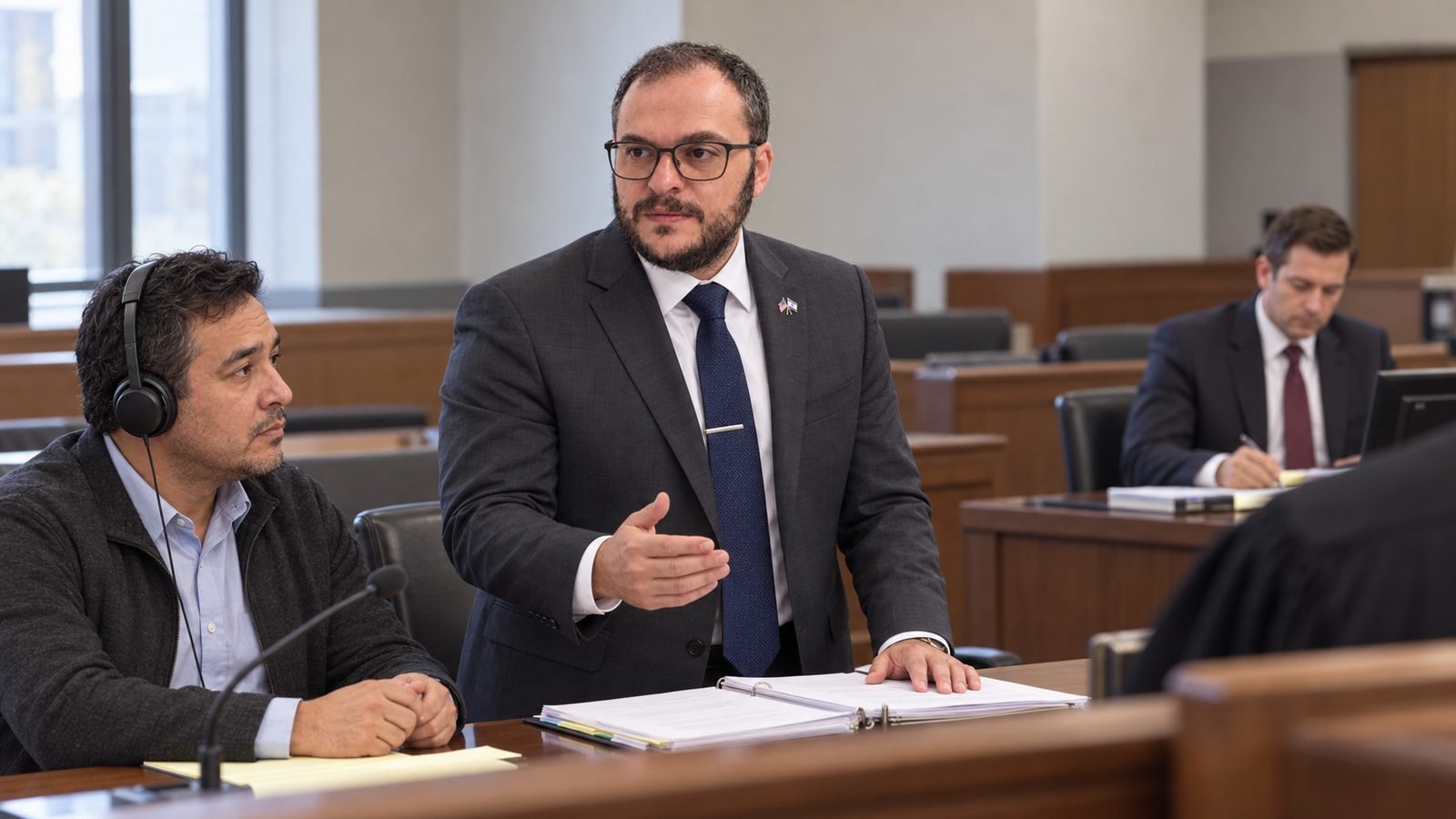
- Plan for the interpreter. At the individual hearing, witnesses testify under oath and an interpreter is provided if necessary. The judge may also ask you questions at any time. If you do not understand a question or the interpreter, say so.
Do not memorize a script. The goal is to know your own story and your own paperwork well enough to tell the truth clearly.
Talk to a lawyer about your own case
Credibility is personal. What matters in one case may not matter in another. If your hearing is coming up, or you are worried about something in your application, speak with an immigration lawyer about your own case and what should be corrected before you testify.
Questions people ask
Does the judge have to believe me unless there is a reason not to?
No. Under INA 208(b)(1)(B)(iii) there is no presumption of credibility at the hearing. A rebuttable presumption arises only on appeal, and only if the judge made no explicit adverse credibility finding.
What if I find a mistake in my I-589 the week before my hearing?
Tell your lawyer right away. It is usually better to correct an error in writing before you testify than to have it come up for the first time on cross-examination. Court filing deadlines apply, so do not wait.
Can I testify in my own language?
Yes. EOIR's Policy Manual says an interpreter is provided if necessary at the individual hearing. If you do not understand the interpreter, say so right away.
Sources
Every rule in this post was checked against these primary sources on October 6, 2026. Law in this area changes often; if you are reading this much later, ask a lawyer what has moved.
More on this from other sources
- Search More Than 500 Cases of U.S. Citizens Detained by Immigration Agents (opens ProPublica in a new tab)
- A Tale of Two Cases: How ICE Operates in the Shadows (opens The Marshall Project in a new tab)
- How Europe Was Transformed by the 2015-16 Migration and Refugee Crisis (opens Migration Policy Institute in a new tab)
- Brooklyn Asylum Seeker Breaks 30-Day Hunger Strike in ICE Detention in Georgia (opens THE CITY in a new tab)
- USCIS Opens Asylum Office in Charlotte (opens USCIS alerts in a new tab)
- U.S. sends torture survivor back to Nicaragua, where he is immediately jailed again (opens Los Angeles Times in a new tab)
Headlines from other publishers, updated November 5, 2026. We link to them; we do not write or endorse them. All news and blogs
Videos worth watching
- Mock Asylum Interview (opens YouTube in a new tab)
- Why seeking asylum in America is so difficult (opens YouTube in a new tab)
- Substantive Law: Asylum, Withholding of Removal & Protection Under the UN Convention Against Torture (opens YouTube in a new tab)
Videos by other creators, picked for clarity. Older videos can show old fees or rules; the dates and amounts in our posts are current as of the date shown at the top.
Written by
Mikhail Usher, Esq.
Founding & Managing Attorney · Admitted in NY, NJ, FL
Mikhail Usher founded Usher Law Group in 2013 and has represented immigrants for more than 15 years. He tries removal cases in immigration court and takes them to the Board of Immigration Appeals and the federal courts of appeals. Before opening the firm he clerked for Judge Amy Steele Donner in Dade County, Florida, and built the criminal division of a Brooklyn firm.